

Need a New Furnace or Water Heater? San Mateo County Is Helping Residents Go Electric
Did you know that heat, air conditioning, and hot water are the top energy users in your home? If your furnace or water heater is suddenly out of order – or even better, if you plan to replace it before it breaks down – consider ditching gas and going electric. You’ll make your home more energy-efficient, and help our community achieve a cleaner, healthier, and more resilient future.
Heat pump water heaters and heat pump HVAC systems are approximately three to five times more efficient than gas systems. In addition to saving energy, switching to electric appliances lowers greenhouse gas (GHG) emissions that contribute to climate change and improves the air quality inside your home so you can breathe easier.
San Mateo County is working to help residents learn about heat pump appliances and how to take advantage of smart planning and available incentives. Keep an eye out for our fun Let’s Go Electric campaign social media posts, ads, and postcards.
Modernize your home with electric appliances
Like our Go Electric! campaign says, having a gas furnace is like using a pager. It’s, like, so last century.
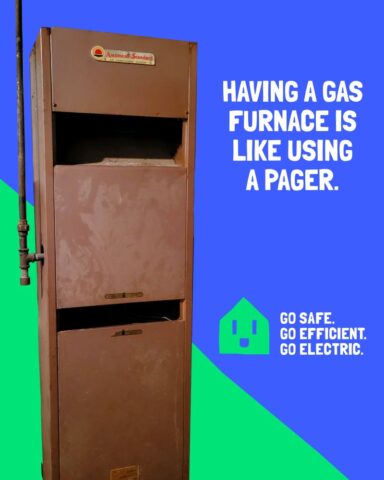
Fortunately, electric appliances like heat pumps have come a long way and there are more alternatives to gas appliances than ever before. (In addition to furnaces and water heaters, there are many ways to go electric. Check out all of our suggestions for increasing your energy efficiency at home.)
In addition to increased efficiency, heat pump HVAC systems provide more comfortable climate control than gas furnaces. They run more consistently at low power to keep temperatures and humidity steady unlike gas systems, which cycle on in short, full-force blasts and then shut off – resulting in more noticeable temperature fluctuations.
When shopping around for a heat pump HVAC system, ask if it can reuse your existing HVAC system ducts – often this is an option. Heat pump HVAC systems also can be set up to be “zone-friendly” and configured for multi-zone temperature control so you can heat or cool specific rooms.
How long do traditional gas furnaces, HVAC systems, and water heaters last? You may want to think about a replacement for your gas furnace if it’s more than 15 years old, your HVAC system if it’s more than 10 years old, and your gas water heater if it’s more than 10 years old.
Heat pumps are so hot, they’re cool too. Here’s how they work
Heat pump technology isn’t new or complicated – in fact, refrigerators and air conditioners are essentially heat pumps.
The simplest way to describe what’s going on inside heat pump appliances is that the technology moves heat around – from outside to inside your home in the winter, and from inside to outside in the summer. It may seem counterintuitive, but even on the coldest days there’s heat energy in the air and ground outside that can be used by a heat pump to heat your home.
Here’s an illustration showing how heat pumps work:
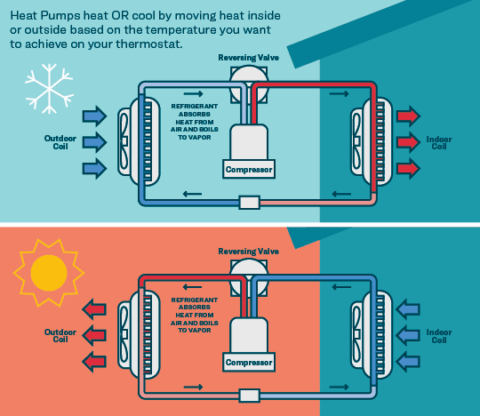
Heat pumps are more efficient than gas appliances because moving heat – versus creating heat like gas furnaces do – uses less energy. Moving heat also gives heat pumps the ability to heat and cool, meaning a single appliance can provide both heat and air conditioning. For more details on how heat pumps work in hot and cold weather, check out this blog post from nonprofit Rewiring America.
Indoor air pollution – gross!
Most of us probably don’t think about it much, but appliances that burn methane gas (the main component of natural gas), including furnaces, water heaters, and stoves, contribute to climate change. Methane is a potent greenhouse gas that traps heat in the atmosphere. Burning methane also can emit carbon monoxide, nitrogen dioxide, and fine particulate matter, contributing to poor air quality in your home. Going electric can remove these sources of harmful indoor emissions and improve air quality, creating safer, healthier spaces for families.

Indoor air pollution can affect your health, especially if you have asthma or other respiratory conditions. Poor air quality also can cause issues like headaches and fatigue, and irritate the eyes, nose, and throat.
In addition to indoor air pollution, gas appliances that are vented to the outside (like furnaces and water heaters) contribute to outdoor air pollution. How much? A lot. According to the Bay Area Air District, the appliances in commercial and residential buildings powered by natural gas produce as much nitrogen oxide (NOx) pollution as all passenger vehicles on the road in the Bay Area in a given year. Switching to electric appliances can make more of a difference than you may think – for our communities and in our own homes.
How to get started: Let’s go electric!
Calculating the costs of switching to electric appliances like heat pumps can depend on a lot of factors, including home size, available rebates and tax credits, and energy costs. To help San Mateo County residents figure out what electric appliances might be a good fit for their homes, Peninsula Clean Energy (PCE) provides a host of useful resources. These include:
- Free individual support: Fill out a form and speak to an advisor and get customized recommendations to meet your needs for switching from gas to electric equipment.
- Rebate finder: Find incentives like tax credits, government discounts, and PCE programs you’re eligible for.
- Contractor search: Find licensed contractors in your area.
- Emergency water heater replacement program: Get a heat pump water heater installed the same day you call about your broken water heater. Or get a gas water heater on loan from PCE while you figure out your options for converting to a heat pump water heater.
If your furnace/HVAC system or water heater is nearing its end-of-life, consider taking some time to learn about heat pumps and if electric appliances could be a good fit for your home (Peninsula Clean Energy is a great place to start).
How can you determine the age of your appliance? Look for a sticker or name plate on the appliance (not the EnergyGuide sticker) that shows the appliance model number and serial number. Use the serial number to look up the appliance’s “manufactured date” on the manufacturer/appliance brand’s website. Remember, end-of-life is about 15 years for gas furnaces, 10 years for gas HVAC systems, and 10 years for gas water heaters.
For more information and links, visit San Mateo County’s Let’s Go Electric campaign web page.

